Monday, January 28, 2013

Absence of Disgust

Like most young children growing up, my favorite meal was chicken fingers. I find it funny now, that when I was younger I never found disgust of the connection that I might actually be consuming chicken's fingers. Today, if I had no knowledge of what chicken fingers were actually made of, if someone offered a chicken finger to me, I know I would cringe in disgust just thinking how I could eat somethings fingers the same way I cringe at the though of consuming a testicle. Melanie Joy explains in "Why We Love Dogs, Eat Pigs, and Wear Cows : An Introduction to CARNISM" that "What is most striking about our selection of edible and inedible animals is not the presence of disgust, but the absence of it." (Joy 431) Growing up I had a complete absence that eating chicken fingers was killing an animal, and as an animal loving human and child I would looked at eating chicken the same way I looked at my spinach, inedible. 

The man in this picture, like majority of humans, may have empathy about the chicken that he is now consuming, but lacks any apathy. Like him, I too have been blinded by the process of "psychic numbing"  creating an image of what I deem acceptable and unacceptable. And, I too, use "invisibility" and "dissociation" to eat beef, chicken and other animals without envisioning the actual animal I am eating.  Some people say that if slaughterhouses had glass walls we would all be vegetarians, however I feel that we need to completely change the way we feel about eating animals, sometimes seeing is not just enough. If slaughterhouses caused minimal pain, people would feel okay about eating any meat that is acceptable in their given society.

"It has been said that denial is one of the most powerful forces in the universe" (Masson 463). Agreeing with Jeffrey Masson, I believe that denial is overwhelmingly strong. Being in denial is like living in a false reality. Everything we see, do, and feel can be masked by denial hiding the harsh truth. Masson explains that "children are trained to disassociate. they eat in kind of a trance of denial" (Masson 468), thus explaining how I could never get enough chicken fingers as a child or had a preference of the leg and thigh when eating chicken for dinner. Denial over powered the reality that I was eating an animal that was tortured and suffered. Now being older, I know what my food is made out of and after watching Earthlings,  I have seen, and felt the fear and disgust of watching these animals suffer every day. Masson says "willed ignorance is surely just one more form of denial." (Masson 463). Since, I eat a burger and know its made from innocent cows who suffered, what does that make of me? I know what has happened to the cows but I do not see their face in my burger so I continue to eat it. I know if it stood their looking right back at me, I just couldn't bear to be in a 100 mile radius of it. Like Masson says on page 470, "We must remove ourselves from whatever blind hides our vision...we owe animals no less." I just need to figure out how. 

post signature

Thursday, January 24, 2013

"Animals are NOT a Renewable Resource"


Watching the second half of Earthlings was easier than the first yet, it was still just as surprising  eye-opening, and shocking. Although, the first half of the documentary was more gruesome  the second half of Earthlings really made me feel like I could make a difference and help prevent buying products and engaging in activities that abuse animals. When watching the section on Leather and how they treat the India Cows I could not help but feel heartsick by the suffering these animals had to endure before they reached the suffering of their slaughter. "...the animals must be shoed and roped together in preparation for a harrowing 'death march,' which could last for several days" (351) Upon hearing the narrator refer the trip to a 'death march', I instantly thought of Trail of Tears, slavery, and even how the Jewish people were treated during WWII. 
People will stop at nothing to get what they want - to gain power. I was sickened by the tactics these people used to transport these animals to an area where they could kill them, skin them, and discard them like they never once lived all for profit, all for power. 


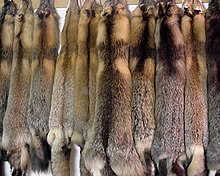
Watching how people got furs, was nauseating. "These wild, free-roaming animals, and their offspring, find themselves unable to live a natural life, can never take even a few steps or feel the earth beneath their feet." (354) In the beginning of the movie the narrator defines an earthling "as one who inhabits the earth" (334) but, how can we as people with a clear conscience take a member of this earth a species just like humans, and not even give them their god given freedoms to even touch the Earth it self. These images depict how cruel humans can truly be. I never knew about the process of skinning the animals they take furs from. I have a dog named Foxy because of her resemblance to a fox. As I watched these vulnerable defenseless animals be skinned alive just left to die, completely disturbed me inside and out. Now that I know what they do to these animals and how they do it, I can make a difference. Like the boy in the starfish story, the boy tell the discouraging man 'I made a difference for that one.' (405). Ignorance is no longer an excuse for me, I know what they do and if I can help just one animal live and prevent its suffering, I have made a difference. It is a small start but it has to start somewhere.


We need to think of animals as one of us. We should not heart anyone or thing knowing we are causing such pain. Once we become equal the suffering will end. We must start one step at a time towards change.

post signature

Wednesday, January 16, 2013

My Ethical Challenge Response


In reading Deni Elliot's Ethical Challenges: Building an Ethics Toolkit, I started to get a greater understanding on what ethics really is all about. Just like breathing "we arrive with the potential to take into consideration how our actions impact people and world around us" (Elliot 1). From a young age we learn morals and/or ethics, how we should act.

In Activities #1 and #2 I had to explore values and what is important to me and how I want others to treat me everyday. Right away I started thinking about things about myself that I normally don't. I realized that I don't always treat others the way I want to be treated. It was good to have a friendly reminder that I should always treat others the way they want to be treated.

Activity #6 and #7 really helped me relieve some current stress. I always feel overwhelmed trying to balance all the things I choose to do and the things I have to do. I join clubs and organizations because I love being involved  Each organization adds a new role to my life, a new responsibility. I was able to list my main roles in order of importance as:

  1. Student
  2. Daughter
  3. Girlfriend
  4. Social Chair of Polo
  5. Sister
 "...it comes down to the fact that we all have ethical responsibility to do what our roles require. Few people have taken the time to figure out just what their roles are, and what the corresponding responsibilities might be." (Elliot 11) While creating this list was fairly easy, ranking them was not. I can see why several people have a hard time ranking them and figuring out the responsibilities each role carries. Completing this activity and writing about the conflicts I have meeting my responsibilities not only helped relieve some stress for now but the activities also helped me realize that I am growing up and as an adult I need to learn how to balance all my roles and prioritize the most important. 


Like the girl in the picture I find myself juggling all my roles trying to keep from dropping them. This activity was great to do at the beginning of the semester and hopefully I can keep my roles and responsibilities in the air!

xoxo,
post signature

Elliott, Deni. Ethical Challenges: Building an Ethics Toolkit. Bloomington, IN: AuthorHouse, 2008. Print.

Welcome!


Welcome to my blog! My name is Whitney Head. I am currently a Sophomore at The University of Texas Austin. I was born and raised in Middletown, New Jersey but I went to high school in Richmond, Texas. I am currently majoring in Urban Studies and minoring in Real Estate. After I graduate I plan on attending Law School and practicing Environmental Law. I created this blog for my UGS class called Leadership, Ethics, and Animals.

Here I will be posting required assignments for the discussion board in the class.  I will be recording my responses and opinions over assigned readings given to my classmates and I by our professor.

I hope you enjoy my blog and the entries I post. You will learn more about who I am and about Professor Bump's course Leadership, Ethics, and Animals at UT.


(baby me)

xoxo,